
rediffGURU Sushil Sukhwani underlines the factors you need to consider before you make the decision to study outside India.
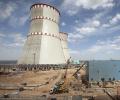
China on Tuesday inked an agreement worth a whopping USD 4.8 billion with cash-strapped Pakistan to set up a 1,200-megawatt nuclear power plant as a sign of increasing strategic cooperation between the two all-weather allies.

The country's foreign exchange reserves declined by $4.53 billion to stand at $629.75 billion in the week ended January 28, RBI data showed on Friday. In the previous week ended January 21, the reserves had decreased by $678 million to $634.29 billion. It touched a lifetime high of $642.45 billion in the week ended September 3, 2021.

The country's foreign exchange reserves declined by $678 million to $634.29 billion in the week ended January 21, according to RBI data. In the previous week ended January 14, the reserves had increased by $2.23 billion to $634.96 billion. It touched a lifetime high of $642.45 billion in the week ended September 3, 2021.

India's forex exchange reserves increased by $289 million to $640.401 billion for the week ended November 19, the Reserve Bank said on Friday. The overall reserves had declined by $763 million to $640.11 billion in the previous reporting week. They had touched a life time high of $642.45 billion in the week ended September 3, 2021.

India is expected to contribute 15 per cent to the global growth in 2023, an International Monetary Fund (IMF) official said on Tuesday. "Both India and China are expected to contribute 50 per cent of the global growth in the upcoming year (2023). "However, the share of India's contribution to global growth is expected to be around 15 per cent," Krishna Srinivasan, director, Asia and Pacific Department (APD) at IMF said at a roundtable with reporters from south Asian countries.

The country's foreign exchange reserves declined by $878 million to stand at $632.74 billion in the week ended January 7, RBI data showed on Friday. In the previous week ended December 31, the reserves had dropped by $1.47 billion to $633.61 billion. It had touched a lifetime high of $642.45 billion in the week ended September 3, 2021.

Advanced economies will be back on track by 2024, but developing economies will be 5 per cent below where they would have been otherwise, IMF's Gita Gopinath said on Wednesday. Economies worldwide have been adversely impacted by the coronavirus pandemic and are slowly coming back into the recovery path. The First Deputy Managing Director of the International Monetary Fund said the war in Ukraine has been a major setback to the global recovery.

Indian-American business leader Ajay Banga is poised to become the next President of the World Bank after the nomination period closed and no country proposed an alternate candidate for the prestigious post. In February, President Joe Biden announced that the US would be nominating Banga to lead the World Bank because he is "well equipped" to lead the global institution at "this critical moment in history." The World Bank on Wednesday closed a month-long window for nominations for its next president, with no alternatives announced to 63-year-old Banga.

Follow these simple steps if you want to create a solid retirement corpus and retire young, says Anamika Pareek.

Keen to capitalise on the growing geopolitical support from African nations after the recently concluded G20 Summit, India is working with the African Union to hold the fourth India-Africa Forum Summit later this year in Kenya's Nairobi, sources said. Prime Minister Narendra Modi is expected to attend the mega meet along with as many as 50 African leaders, they added. First held in New Delhi in 2008, the India-Africa Forum Summit marked India's initial diplomatic efforts to seek a comprehensive partnership with the African bloc of nations as a whole, at a time when China had begun its own outreach.

The country's foreign exchange reserves declined by $1.47 billion to $633.61 billion in the week ended December 31, RBI data showed. In the previous week ended December 24, the reserves dipped by $587 million to $635.08 billion. It touched a life-time high of $642.45 billion in the week ended September 3, 2021.
India's forex reserves decreased by $587 million to $635.08 billion for the week ended December 24, the RBI said on Friday. In the previous week ended December 17, the overall reserves had decreased by $160 million to $635.67 billion. The kitty had touched a lifetime high of $642.45 billion in the week ended September 3, 2021.
The country's foreign exchange reserves declined by $160 million to stand at $635.667 billion in the week to December 17, RBI data showed on Friday. In the previous week ended December 10, the reserves had decreased by $77 million to $635.828 billion. It touched a lifetime high of $642.453 billion in the week ended September 3, 2021.
In the steepest weekly fall ever, India's forex reserves slid by $11.17 billion to $606.47 billion as the currency came under pressure due to geopolitical developments, according to the Reserve Bank data released on Friday. For the previous reporting week ended March 25, the overall reserves had slid by $2.03 billion to $617.65 billion. The steep fall in the reserves was because of a decline in the core currency assets, which fell by $10.73 billion to $539.73 billion.

Basil had negotiated the Indian economic relief package to help Sri Lanka tackle the current foreign exchange crisis.

We asked colleagues, present and past, to reflect on a man who has made such a difference to their lives and careers. Here it is then, a rich collection of memories that offer enchanting glimpses of the enigmatic Ajit Balakrishnan.

A prominent Indian Diaspora body, FIIDS, on Monday urged Finance Minister Nirmala Sitharaman to allow non-resident Indians and overseas citizens of India (OCI) card holders to invest in the Indian stock market. Such a move would boost the Indian economy further by attracting investment from the global Indian community, said the Foundation for India and Indian Diaspora Studies (FIIDS) USA. FIIDS is a US-based institute for US-India policy studies and awareness.

The country's foreign exchange reserves declined by $2.71 billion to $637.69 billion in the week to November 26, RBI data showed. In the previous week ended November 19, the reserves had increased by $289 million to $640.40 billion. It touched a lifetime high of $642.45 billion in the week ended September 3, 2021.

The IMF on Tuesday cut India's economic growth forecast by 0.5 percentage points to 9 per cent for the current fiscal year, with its chief economist Gita Gopinath saying that the slight downgrade is mainly due to the impact of the spread of the Omicron variant. "If you look at the 2021-22 fiscal year, we have a slight downgrade of -0.5 percentage points and for the next fiscal year 2022-23 we have a slight upgrade of 0.5 percentage points. So, growth for the previous fiscal year is now nine per cent and for this year now is at nine per cent. We moved it up slightly," Gopinath told reporters during a news conference in Washington. In its latest update of World Economic Outlook on Tuesday, the International Monetary Fund has cut India's economic growth forecast to 9 per cent for the current fiscal year ending March 31, joining a host of agencies which have downgraded their projections on concerns over the impact of the spread of Omicron on business activity and mobility.

US's terrible political and economic leadership will ultimately cost the dollar its value. India must act early to avoid being dragged down, suggests R Jagannathan.

Now that the economy is growing at a higher-than-expected rate, it is time to accelerate the pace of fiscal consolidation, and the Budget could be a good starting point, argues Rajesh Kumar.
The country's foreign exchange reserves grew by $2.23 billion to $634.96 billion in the week ended January 14, RBI data showed. In the previous week ended January 7, the reserves had declined by $878 million to $632.74 billion. It touched a lifetime high of $642.45 billion in the week ended September 3, 2021.

'If you look at the order books of capital equipment companies or money deployed on the ground, there is forward movement in terms of actual investment by the private sector.'
The country's foreign exchange reserves declined by $763 million to $640.11 billion in the week ended November 12, RBI data showed. In the previous week ended November 5, the reserves had decreased by $1.14 billion to $640.87 billion. It touched a lifetime high of $642.45 billion in the week ended September 3, 2021.


The main Opposition BNP of former premier Khaleda Zia, 78, who is under house arrest, is boycotting the elections amidst violence.

The NBFCs, which filed for ECB in January with the Reserve of India (RBI), include REC (over $500 million), Tata Motors Finance ($200 million), L&T Finance Holdings ($125 million), and Shriram Finance ($750 million), according to the RBI data. A senior executive with State Bank of India (SBI) said overseas borrowing by Indian companies, including highly rated NBFCs, was likely to grow because hedging costs were low and there was a softening bias in global interest rates.

Young Indian Grandmaster R Praggnanandhaa on Friday called for a robust financial backing for chess, debunking the common concept that players require minimal monetary support to train and excel in the sport.
The country's foreign exchange reserves declined by $2.47 billion to reach $616.895 billion in the week ended August 20, RBI data showed on Friday. In the previous week ended August 13, 2021, the reserves had declined by $2.099 billion to $619.365 billion. The forex kitty had touched a lifetime high of $621.464 billion in the week ended August 6, 2021.
Take the rediff business quiz and see how much you know about the International Monetary Fund

India's foreign exchange reserves decreased by $2.099 billion to stand at $619.365 billion for the week ended August 13 due to a fall in core currency assets and gold, RBI data showed on Friday. The forex kitty had increased by $889 million to a lifetime high of $621.464 billion in the previous reporting week. Foreign currency assets (FCAs), a major component of the overall reserves, decreased by $1.358 billion to $576.374 billion in the reporting week, as per the weekly data by the Reserve Bank of India (RBI).

'That's how big this taboo is.' 'It would be difficult for them to understand what I am trying to show with Jaggi.'
The country's foreign exchange reserves increased by $889 million to a lifetime high of $621.464 billion in the week ended August 6, 2021, RBI data showed on Friday. In the previous week ended July 30, 2021, the reserves had surged by $9.427 billion to reach $620.576 billion. In the reporting week, the increase in the forex kitty was due to a rise in foreign currency assets (FCAs), a major component of the overall reserves, as per weekly data by the Reserve Bank of India (RBI).

India's economy continues to be robust, but downside risks such as rising crude oil prices, adverse weather conditions, and the global banking crisis outweigh the upside potential in gross domestic product (GDP) growth in the current financial year (FY24), the finance ministry said on Tuesday in its Monthly Economic Review for March. "We reiterate that downside risks to our official forecast of 6.5 per cent for real GDP growth in FY24 dominate upside risks," the review said. "Opec's surprise production cut has seen oil prices rise in April, off their lows of low-seventies per barrel in March.

The country's foreign exchange reserves rose by $2.04 billion to $639.52 billion in the week ended October 8, according to RBI data. In the previous week ended October 1, the reserves had dipped by $1.17 billion to $637.48 billion. The reserves had surged by $8.90 billion to a life time high of $642.45 billion in the week ended September 3.

The country's foreign exchange reserves surged by $9.427 billion to record high of $620.576 billion in the week ended July 30, according to the latest RBI data. In the previous week ended July 23, the reserves had declined by $1.581 billion to $611.149 billion. In the reporting week ended July 30, the rise in the reserves was on the back of an increase in foreign currency assets (FCAs), a major component of the overall reserves, the Reserve Bank of India's (RBI) weekly data released on Friday showed.

With India's G20 presidency ensuring several tangible outcomes, world leaders at the two-day summit in New Delhi hailed Prime Minister Narendra Modi for his 'decisive leadership' and for championing the voice of the Global South, sources said on Sunday.
The country's foreign exchange reserves dipped by $1.17 billion to stand at $637.48 billion in the week ended October 1, RBI data showed on Friday. In the previous week ended September 24, 2021, the reserves had declined by $997 million to $638.65 billion. The reserves had surged by $8.90 billion to a lifetime high of $642.45 billion in the week ended September 3, 2021.

The country's foreign exchange reserves declined by $1.581 billion to stand at $611.149 billion for the week ended July 23, RBI data showed on Friday. The reserves had reached a lifetime high of $612.730 billion after rising by $835 million in the previous week ended July 16, 2021. In the reporting week, the drop in the reserves was mainly due to a fall in foreign currency assets (FCAs), a major component of the overall reserves, as per weekly data by the Reserve Bank of India (RBI).
 © 2026 Rediff.com - Advertise with us - Disclaimer - Privacy Policy - Sitemap - Feedback - About us - Terms of use - Grievances